Resilience & Mental Recovery
She Lost 30-0... Then Everything
Changed: The Art of Mental Recovery
Witness how a client transformed a 30–0 defeat into a 23–5 victory by shifting her internal response, proving that the ability to recover and re-engage is the ultimate competitive advantage in both sports and business.
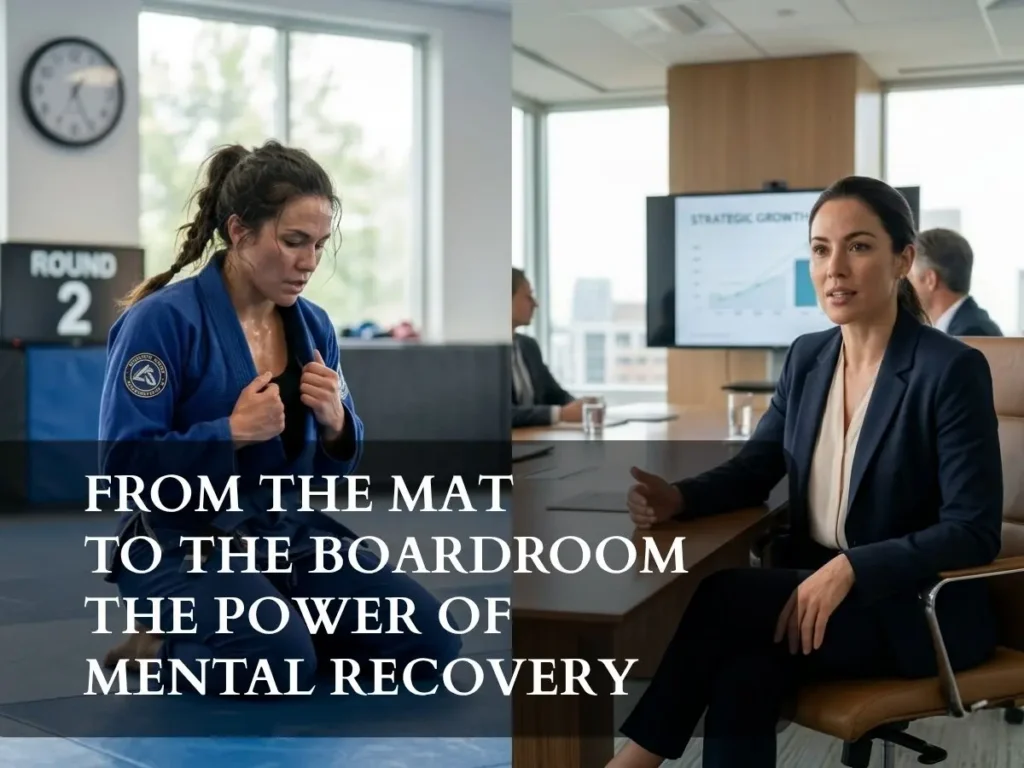
“Most people would have walked away. But the true lesson wasn’t in the loss — it was in what happened next.”
The Match That Changed Everything
In a recent coaching session, my client Nathalie shared a story that perfectly illustrates why mental recovery and resilience are more important than initial perfection.
Nathalie recently competed in a jiu-jitsu tournament. In her first match, the unexpected happened: her opponent’s aggressive approach triggered a trauma response. Nathalie froze. She couldn’t access her years of training and ultimately lost 30–0.
Same Opponent, Different Outcome
Instead of leaving the tournament, Nathalie stayed for the open weight category. She faced the exact same opponent.
WHAT CHANGED?
- The environment was the same.
- The competitor was the same.
- The skill level was the same.
What changed was Nathalie’s internal state. She processed the trigger with her coach, adjusted her mindset, and stepped back onto the mat. She won that second round 23–5. This is the core of overcoming the freeze response: it isn’t about never freezing; it’s about how fast you can thaw.
The Resilience Framework: From Loss to Leadership
To help you visualize the shift Nathalie made, here is a breakdown of how she transformed a trauma response into a professional breakthrough.
| Stage | The "Freeze" Moment (Jiu-Jitsu Match 1) | The "Re-Entry" Moment (Match 2 & Boardroom) |
|---|---|---|
|
Physical State |
High cortisol, “frozen” muscles, tunnel vision. |
Regulated breathing, awareness of surroundings. |
|
Mental Narrative |
Mental Narrative “I can’t do this; I’ve forgotten my training.” |
“I know what triggered me; I am ready to adjust.” |
|
Action Taken |
Withdrawal and silence. |
Active participation and strategic engagement. |
|
Outcome |
OutcomeLoss (30–0) and feeling defeated. |
Win (23–5) and professional networking success. |
The framework above applies equally in athletics and professional leadership contexts.
From the Mat to the Boardroom
The power of coaching is that mental recovery isn’t situational—it’s a transferable skill. A few days later, Nathalie attended a corporate event with senior leadership. Typically, she would stay in the back, quiet and invisible.
This time, she took her “win” from the mat and applied it to her career:
- She sat in the front row.
- She initiated high-level conversations.
- She built meaningful professional connections.
“Confidence doesn’t arrive before the event. It is a byproduct of choosing to re-engage after discomfort.”
4 Steps to Build Resilience and Confidence
If you find yourself stuck or “frozen” under pressure, use these coaching takeaways to re-engage immediately:
Notice your “freeze” moments. Labeling it as a physiological response rather than a personal failure is the first step toward recovery.
Ask yourself: What exactly happened? What triggered this? Identifying the “why” takes the power away from the fear.
Do not wait for the “feeling” of confidence. Build it through the physical act of stepping back in.
Recognize that a breakthrough in your personal life or hobbies (like jiu-jitsu) provides the blueprint for breakthroughs in your professional life.
The question isn't whether you will struggle. The question is: Will you step back in?
Frequently Asked Questions
Common questions about the freeze response, mental recovery, and building resilience across life and leadership.
What is a "freeze response" in high-pressure situations?
How do you recover quickly from a mental block?
Can resilience learned in sports help in business?
How does coaching help with trauma responses at work?

Dorice Horenstein helps organizations bring out the best in their people by creating a path to human flourishing under pressure. An international keynote speaker, Mental Fitness and Positive Intelligence® expert, and author of Choose to Be Your Own Champion and the best-selling Moments of the Heart, Dorice brings more than 30 years of leadership and education experience to her work with leaders and teams.
She equips people with the Champion Mindset and practical tools to think clearly, choose intentionally, and act confidently when it matters most.
With infectious energy, humor, and practical wisdom, Dorice transforms stress into clarity, disconnection into meaningful connection, and everyday challenges into opportunities for growth. Her unique approach connects brain and heart—combining neuroscience and mental fitness with decades of leadership experience and universal wisdom.
Dorice inspires people to rise to their Champion Level, strengthen relationships, and create workplaces where people and performance flourish together.